
If You Own These 7 Items, You’re Wealthier Than 80% of People, Even If You Feel Average

Scroll through social media for five minutes and you’ll see someone’s new Tesla, another person’s vacation in Santorini, and at least three kitchen renovations that cost more than your first car. It’s exhausting. And it has a way of making you feel like you’re falling behind, even when your life is perfectly fine by any reasonable measure.
But here’s the thing about wealth that most people get backwards: it’s not really about what you’re accumulating. It’s about what you already have that you’ve stopped noticing. The refrigerator humming in your kitchen, the hot water that appears when you turn a handle, the phone in your pocket that would’ve seemed like science fiction twenty years ago—these aren’t participation trophies. They represent a standard of living that most humans throughout history couldn’t have imagined.
So before you beat yourself up for not having a beach house or a stock portfolio that makes you feel secure, let’s talk about what “wealthy” actually means when you zoom out a little.
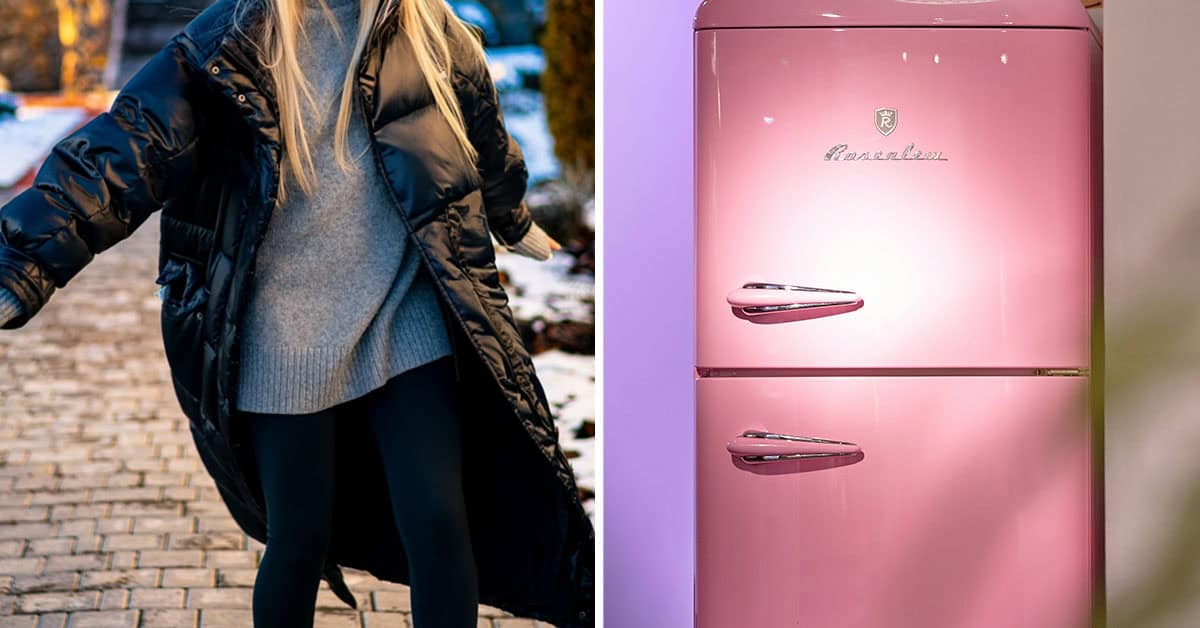
1. A Refrigerator That Works
This seems almost too basic to mention, which is exactly the point. About 1.3 billion people worldwide don’t have reliable access to electricity, and even among those who do, refrigeration isn’t guaranteed. Your ability to buy groceries once a week instead of daily, to keep medications at safe temperatures, to have ice in your drink on a hot day—that’s not nothing.
The modern refrigerator essentially eliminated food spoilage as a daily concern for much of the developed world. Before mechanical refrigeration became common in the mid-20th century, people structured their entire lives around food preservation. Ice delivery, root cellars, same-day shopping, and seasonal eating weren’t lifestyle choices—they were survival strategies.
When researchers study quality of life indicators, access to basic appliances consistently ranks as a major factor in overall wellbeing. Not because a fridge makes you happy, but because it removes a source of daily stress you’ve probably never had to think about.
2. More Than Five Books You Actually Own
Physical book ownership has become something of a luxury in an age of streaming and digital everything. But if you’ve got a small shelf of books—doesn’t matter if it’s self-help, fantasy novels, or that random biography someone gave you—you’re part of a shrinking club.
About 750 million adults worldwide can’t read at all. Billions more are literate but don’t have access to books beyond basic educational materials. The ability to casually own information, to reference something you read years ago, to lend a book to a friend—that’s a form of wealth that doesn’t show up in bank statements.
There’s something psychologically significant about having books around, too. Studies on environmental psychology suggest that homes with books signal intellectual engagement and correlate with everything from children’s vocabulary development to adults’ sense of personal identity.
3. A Door That Locks
Security is one of those baseline human needs that disappears from your awareness once it’s met. But think about what a locking door actually represents: the ability to separate yourself from the outside world, to control who enters your space, to sleep without wondering who might walk in.
According to UN estimates, over a billion people live in informal housing—structures without secure walls, reliable roofs, or doors that can be locked. Another billion live in housing that’s technically “formal” but lacks basic security features. When psychologist Abraham Maslow built his famous hierarchy of needs, safety sat right near the foundation for good reason.
If you can leave your home, go to work, and reasonably expect your stuff to be there when you return, you’ve cleared a hurdle that occupies enormous mental bandwidth for people who can’t assume the same.
4. Access to Clean Water From a Tap
Turn a handle, water comes out, you drink it without thinking twice. This miracle of infrastructure is so mundane that you probably only notice when it fails—when a pipe breaks or there’s a boil-water advisory that lasts a few days and feels incredibly inconvenient.
Meanwhile, about 2 billion people lack access to safely managed drinking water. Hundreds of millions spend hours each day collecting water from distant sources, water that often carries diseases. The entire trajectory of modern public health changed when cities figured out how to separate clean water from sewage. That was only about 150 years ago.
The psychological burden of water insecurity—the constant calculation of how much is left, whether it’s safe, when you’ll get more—is something most Americans have never experienced for more than a day or two during a natural disaster.
5. A Coat That Actually Keeps You Warm
Not a fashion coat. Not a light jacket that works in October. A real coat that could get you through an unexpectedly cold night without suffering.
Clothing insecurity affects more people than you’d think, even in wealthy countries. But globally, the numbers are staggering. The ability to own weather-appropriate clothing for multiple seasons, to replace a worn coat before it becomes useless, to have options for different conditions—this is genuine material wealth.
There’s a reason charities focus so heavily on coat drives every winter. When you don’t have adequate clothing, every cold day becomes a minor emergency. Your world shrinks to whatever spaces offer warmth.
6. A Bank Account With Even $50 in It
Here’s a statistic that tends to surprise people: about 1.4 billion adults globally are “unbanked,” meaning they have no access to formal financial services at all. No savings account, no ability to receive direct deposits, no cushion between themselves and economic catastrophe.
And within the banked population, having any savings at all puts you ahead of a huge percentage. Studies regularly find that 40% of Americans couldn’t cover an unexpected $400 expense without borrowing or selling something.
If you’ve got fifty bucks sitting in an account that you’re not immediately planning to spend, you have more financial breathing room than billions of people. It’s not beach-house money, but it’s buffer money—and buffer money is what separates a bad week from a crisis.
7. Someone You Could Call at 2 AM
This one doesn’t cost anything, but it might be the most valuable item on the list. Do you have at least one person who would pick up the phone in the middle of the night if something went terribly wrong? A parent, sibling, friend, partner—anyone who would genuinely help rather than send you to voicemail?
Research on social connection and health consistently shows that relational wealth predicts wellbeing better than financial wealth does. Loneliness is associated with increased mortality at rates comparable to smoking. Having people who care whether you live or die isn’t a given—it’s a resource you’ve built or been gifted.
The cruel irony of social media is that it makes us feel simultaneously more connected and more alone. Seeing everyone’s highlight reels doesn’t create real relationships. But if you’ve got even one genuine connection, you possess something money genuinely cannot buy.
None of this is meant to suggest you should feel guilty for wanting more, or that ambition is somehow wrong. Wanting a better life is human and healthy.
But the hedonic treadmill—that psychological phenomenon where we adapt to improvements and stop noticing them—can make us miserable in the middle of genuine abundance. You might be reading this on a device that contains more computing power than NASA used to reach the moon, from a climate-controlled room, with a full stomach, and still feel like you’re barely getting by.
The research on gratitude and wellbeing doesn’t suggest you should paste on a fake smile and pretend everything is fine. It suggests that noticing what’s actually present—not just what’s missing—changes your experience of life in measurable ways.
So maybe you’re not wealthy by Instagram standards. But by the standards of human history, by the standards of most people alive today, by any reasonable measure of security and comfort? You’re doing better than you think.
Cover image via Unsplash